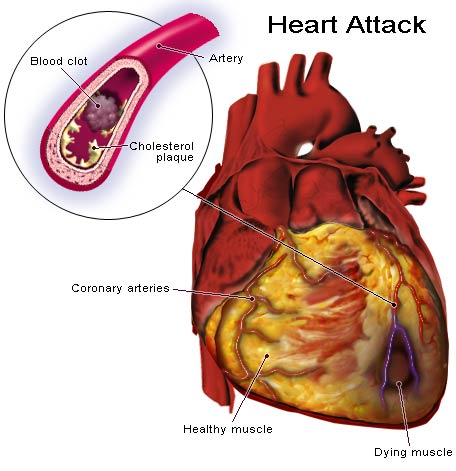
Cardiovascular Disease is the leading cause of death for both men and women in the United States of America. The heart beats about 60 to 100 times a minute, but sometimes it will go out of rhythm which is called an arrhythmia. Another part of this disease is heart failure. That means that the heart is not pumping as well as it should, which is quite scarey. Heart failure affects nearly 5 million Americans, it is also the leading cause of hospitalization for people over the age of 65. Some ways to prevent it would be to quit smoking, handle stress in a healthy way and get a lot of excersize.
Symptoms
-chest discomfort: it might go away and then come back, uncomfortable pressure, squeezing or pain
-discomfort in other upper body areas: pain in the arms, back, neck, jaws, or stomach
-shortness of breath
-cold sweats
-nausea
-lightheadedness
The organ system that goes along with this disease would be the cardiovascular system.
Sources for assigment:


 Posts
Posts


4 comments:
The heart rate increases which must increase all the other homeostasis functions as well.
With heart disease, the body must work harder to obtain homeostasis. The negative feedback (chest discomfort, nasuea, cold sweats, etc.) inform the body that something is wrong, triggering the fight to maintain homeostasis. Looks like it's difficult to get back to stable conditions with so many deaths resulting from this disease, though!
I like how you put stated facts about this disease in you paragraph; for example, it is the leading cause of death for both men and women in the US. Homeostasis is inturrupted in cardiovascular diesease because the heart has to pump harder and faster for blood to flow to places. This puts alot of stress onto the heart and in return could cause failure of keeping the body functioning normal.
A heart attack is when blood vessels that supply blood to the heart are blocked, preventing enough oxygen from getting to the heart. The heart muscle dies or becomes permanently damaged. Your doctor calls this a myocardial infarction.
Post a Comment